
Students at Kingston University have said that accessibility across campuses remains inconsistent, describing ongoing barriers that affect their learning, independence and mental health.
A recent survey conducted by The River found that for students with physical disabilities, neurodivergence and mental health conditions, accessibility goes beyond the basic ramps and elevators. Respondents also believe teaching and assessment methods, as well as communication with staff, needs to be addressed.
Third-year student, Muhammad Isa, who is currently studying accounting and finance at the university said that he has had to repeatedly advocate for his requirements: “[The university] recently asked me for more evidence for an extension.” This was despite their previous awareness of his needs throughout the duration of his studies.
Several students highlighted that the university had not matched the information about accessibility and disability services that had been given to them at the time of their enrolment.
A second-year environmental science student, who wishes to remain anonymous, said: “The [accessibility] services are very restrictive to the point where they waste your time. They only to send you to another department that can’t help without previous input.”
Other students reported problems with physical access across Kingston’s campuses, claiming that the classrooms, buildings and common areas are “not remotely accessible” due to heavy doors creating obstacles for the students. Others also said that “many classrooms are not fit for wheelchairs,” highlighting lecture halls in particular for their lack of accessible seating.
In particular, the Kingston Hill campus was seen to be hugely inaccessible for students, due to the number of steps between the buildings and the canteen area. The issue of the elevators inside the John Galsworthy building, located on the Penrhyn Road campus was also raised, with many students claiming that there is always one that is out of order and, according to one student: “the lifts are always packed.”
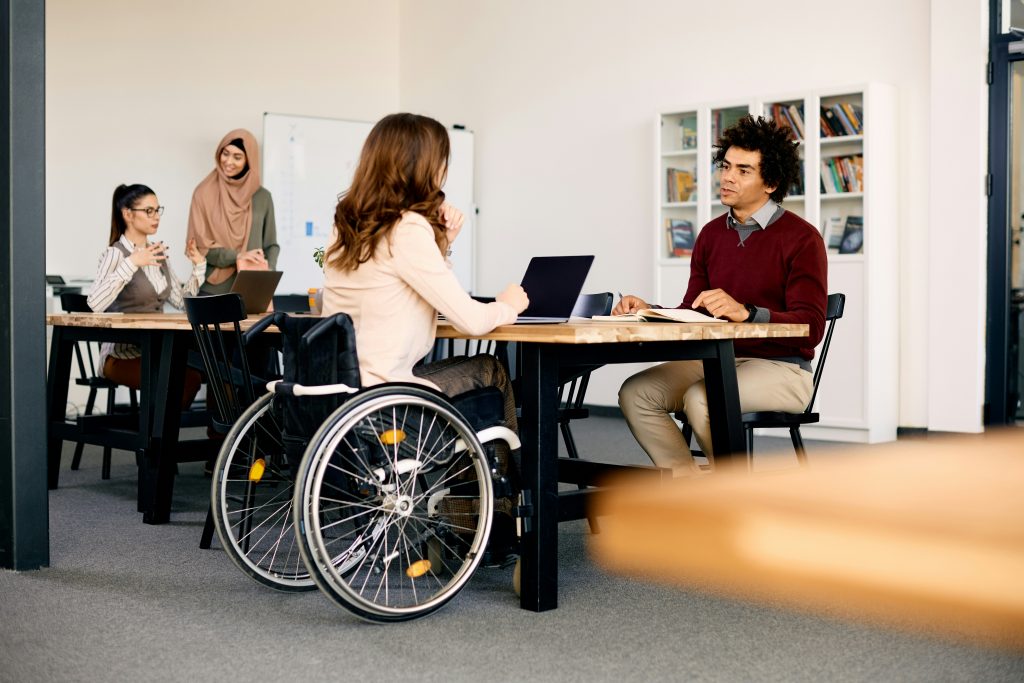
Beyond campus infrastructure, students raised concerns about teaching practices that do not always account for disabled learners and neurodivergent students. They also spoke about inconsistent adjustments, such as deadline extension, alternative assessment formats and the use of overwhelming technology.
When asked about the accessibility of lectures and learning materials, one student said: “Canvas is information heavy and has a cluttered format…not every professor starts a Teams meeting or creates a recording,” student X said.
Toby Veda, a second-year international business student also claimed that, for him, the teaching methods used by the university were “not accessible.”
However, there were some positive responses to the survey. Some students said that the toilets and elevators were accessible, stating that the buttons in the elevators are low and easy to reach. Some of the toilets flush automatically, making it easier for students with physical disabilities.
Making friends and feeling part of the community can also be hard for students with special requirements. When asked about this, one student said: “Many [extra-curricular activities] require large sums of money and memberships, which for most people with an accessibility requirement, is not accessible at all.”
Kingston University offers disability support through its dedicated services, but students reported long waiting times and delays, particularly at the start of this academic year.
Several students have said that they felt exhausted from repeatedly explaining their conditions to different departments and described it as emotionally draining.
For the most part, students have said that, it is clear that progress is being made to cater for different accessibility needs however, the university needs to do more to ensure that all students can fully participate in learning and fully experience university life.
A Kingston University spokesperson said: “The University is committed to ensuring all students feel supported, included and able to thrive during their time with us. We take seriously all feedback about student experience and continually review our services, facilities and teaching practices to respond to the needs of our community.
“In recent years we have made significant investment in improving accessibility across our campuses. The Penrhyn Road Ground Floor Transformation Project delivered a new lift and enhanced accessible facilities, and the John Galsworthy building is served by four lifts that meet accessibility standards. We have also increased the number of push‑button door‑opening plates across the estate, including at the Jacqueline Wilson Hall and Clattern Lecture Theatres. An accessibility audit of Kingston Hill campus has been completed, and improved wayfinding and signage will be introduced as a result. We also work with AccessAble to provide detailed, reliable information about access to buildings and facilities across all University campuses.
“Our Disability and Mental Health Service works to ensure all students with a Summary of Support Needs can access appropriate reasonable adjustments. This includes the use of that document as evidence when applying for a ten‑working‑day extension. Where students feel that recommended adjustments are not being applied consistently, we encourage them to contact the service directly so that their individual circumstances can be addressed.
“We recognise that accessible learning also depends on inclusive teaching practice. We are working closely with students to improve the Canvas experience, including through consultation with the Autism Peer Network, and will shortly be distributing an end‑of‑year feedback survey to gather wider student input. These Insights, alongside the work of the University’s Education Committee, will inform ongoing improvements to the University’s assessment approach, supporting the embedding of authentic, inclusive, and accessible practices across all courses”.